Update
Java4Shell: ask suppliers which running services are exposed
CVE-2026-114938 needs a service-specific answer: deployed Java build, CPU capability, reachable input and evidence that every relevant node was addressed.
Contrata editorial team ·
Oracle's 17 November 2026 security update addresses CVE-2026-114938, widely called Java4Shell. For an Australian bank, insurer or super fund buying a Java-based service, the useful question is whether the running service has an affected runtime and exploitable processing path. A supplier-wide statement that “Java has been updated” leaves deployment coverage unanswered.
This is a supplier exposure alert, checked on 23 November AEST. We have not verified exploitation or disruption at an Australian regulated firm. A vulnerable dependency is not evidence that a particular organisation was compromised.
Latest update — 23 November 2026 AEST. Added Optimizely's supplier-specific remediation statement below. The 20 November update added Keycloak fixed-image and separate server/Operator checks. This editorial refresh also adds a service-response triage table and CERT-EU guidance. Original publication: 19 November 2026; no Australian customer remediation or exploitation is established by these updates.
Keycloak reports updated images
The Keycloak team's advisory, updated at 08:00 UTC on 19 November, says its 26.8 container images have been updated to Red Hat OpenJDK 21.0.13.1 with the fix. The listed tags include latest, 26.8, 26.8.2 and 26.8.2-3. An updated tag does not establish that a supplier has pulled and deployed that image. Ask for the actual image digest, bundled runtime and coverage of running and standby instances; check custom builds against their runtime vendor's guidance.
Keycloak and Red Hat also distinguish the server pods from the Operator's separate Java process. Configuring one does not configure the other. Follow supported product-specific instructions and verify effective settings in each relevant running JVM, rather than accepting an environment-variable screenshot. Keycloak says it has not established an unauthenticated remote exploit path into the Operator itself; do not describe the Operator and server as having identical demonstrated exposure.
Optimizely reports applying mitigations and patches
Optimizely's 20 November advisory says all mitigations and available patches were applied as of 20 November at 20:10 UTC. It reports finding no evidence of exploitation across its products or services. This is the supplier's statement, rather than independent deployment validation or evidence of a particular Australian customer's coverage. Ask how its assessed scope maps to the service you buy. This Java vulnerability response is separate from the Optimizely Web Experimentation script incident.
What the advisories establish
Oracle's November advisory lists the flaw in the compiler component of Java SE and GraalVM products, with a CVSS score of 8.1 and possible remote exploitation without authentication. Its affected-release matrix is specific to Oracle products. Do not substitute it for another Java distributor's build and patch guidance.
Red Hat's bulletin, updated on 20 November, describes memory corruption in the accelerated Base64 decoder. Its exposure conditions combine an affected OpenJDK runtime, an x86-64 CPU exposing AVX-512 VBMI, the accelerated path being enabled and attacker-controlled Base64 reaching the decoder. ARM64 and CPUs without that capability are outside the affected path described there. These qualifications matter when assessing a service; they do not justify declaring an entire supplier unaffected from one host sample.
Red Hat also identifies container rebuilds and product-bundled runtimes as considerations. Its temporary mitigations require restarting affected JVMs. Use the relevant product vendor's supported instructions and change process; this article is not a command sequence to apply across a mixed fleet.
Trace the service, not just the software inventory
A plausible exposure is an outsourced customer portal or identity service backed by an affected Java deployment. This is a dependency scenario, not a claim that a named Australian firm uses an affected product. Your direct supplier may buy the hosting or identity layer from another provider.
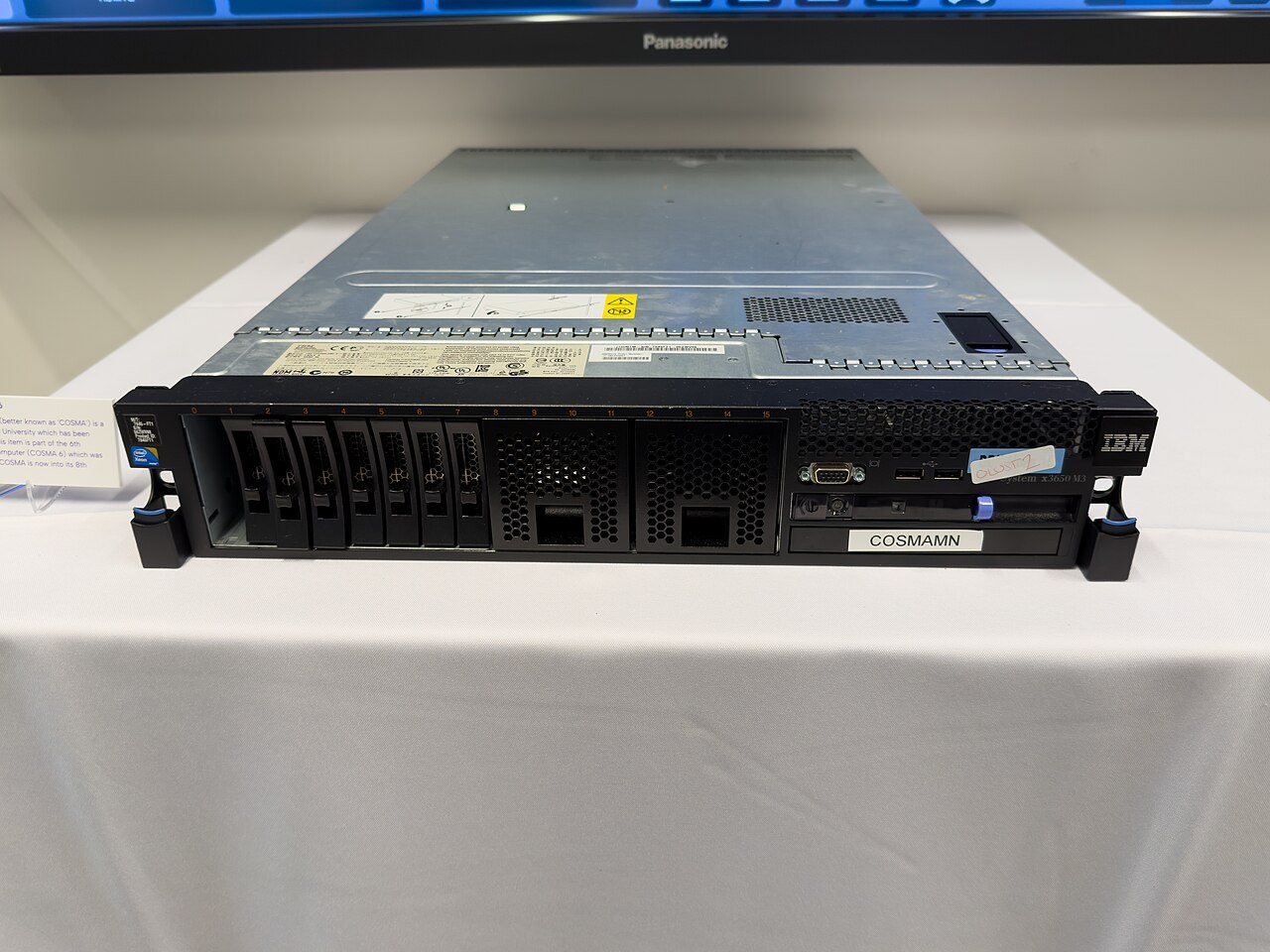
Photograph by Mike Peel (www.mikepeel.net), via Wikimedia Commons, CC BY-SA 4.0. Resized; this local photograph remains available under the same licence. Its appearance establishes neither CPU capabilities nor Java patch state.
Ask the service owner to connect the advisory to the purchased function. A statement about an employee laptop does not answer a question about the hosted login service. A patched build in an image registry does not establish that the workload is running that image.
Request a bounded service response
Send the supplier the service name, tenant or arrangement reference and CVE identifier through the agreed security route. Request the following evidence without asking them to disclose secrets or other customers' infrastructure.
| Question | A useful response | What remains unresolved |
|---|---|---|
| Which service instances were assessed? | Production, standby and relevant recovery instances, with the assessment scope | “Our servers” without a service boundary. |
| Which Java build is actually running? | Distributor, full runtime build and relevant application or image revision | A package downloaded but not deployed. |
| How was the CPU condition assessed? | Capability visible to each relevant workload, including virtualised hosts | A physical-host brand or a sample from another environment. |
| Can untrusted input reach the affected path? | Product-specific assessment from the responsible engineering/security team | A login screen assumed to prevent pre-authentication processing. |
| What changed, and where? | Supported fix or interim mitigation, deployment/restart evidence and exceptions | A change ticket closed without instance coverage. |
| What has been tested? | Service and authentication checks after the change, including standby readiness | Only confirmation that a process started. |
Record unknowns as unknowns. A supplier can give an initial exposure assessment before completing the rollout. Keep that initial answer separate from evidence that the change reached all relevant instances.
Triage the first supplier answer
Ask for an initial service-specific answer while engineering confirms the full rollout. Give the response an evidence state rather than a supplier-wide green or red label:
| Initial response | What the reviewer records | Next action |
|---|---|---|
| Relevant affected runtime and processing path confirmed | Service scope, engineering assessment and current protection | Obtain the supported fix or mitigation plan and deployment coverage. |
| Assessed instance is outside the described affected path | Build, workload capability and reasoning for that instance | Check whether standby, recovery and differently hosted instances share that conclusion. |
| Runtime, CPU condition or input path remains unknown | The specific unanswered question and accountable supplier owner | Agree a response time using the firm's exposure and escalation process. |
CERT-EU's 18 November advisory recommends updating vulnerable OpenJDK versions, prioritising internet-facing applications. That prioritisation does not make an unknown internal service safe or replace the product-specific assessment. Use the Oracle and runtime-vendor advisories above for the actual affected builds and supported treatment.
Work an exception through the recovery path
Consider a fictional insurer whose portal supplier confirms its active node has been addressed, but leaves the standby node outside the change record. The active service working today does not resolve what happens at failover. Ask who can activate that standby node, what protects it now, and what evidence will close its exception. The example does not establish that the standby is vulnerable; it establishes that its status is unknown.
Use the existing supplier SBOM review to connect software evidence to a release, then request deployment evidence for this service. An inventory is a starting point for the question, not a completed exposure decision.
Under CPS 234, entities evaluate third-party information-security control design and systematically test control effectiveness. The evidence request here is an editorial review method, not a prescribed APRA form or a new reporting deadline. Security and regulatory owners must assess actual impact and applicable obligations; the CVE announcement alone determines neither.
For an interim mitigation, retain its owner, scope, implementation evidence, review date and the supported permanent-fix plan. Follow the remediation closure guide before changing the service record to resolved. Keep the standby exception open until its evidence has been assessed.